
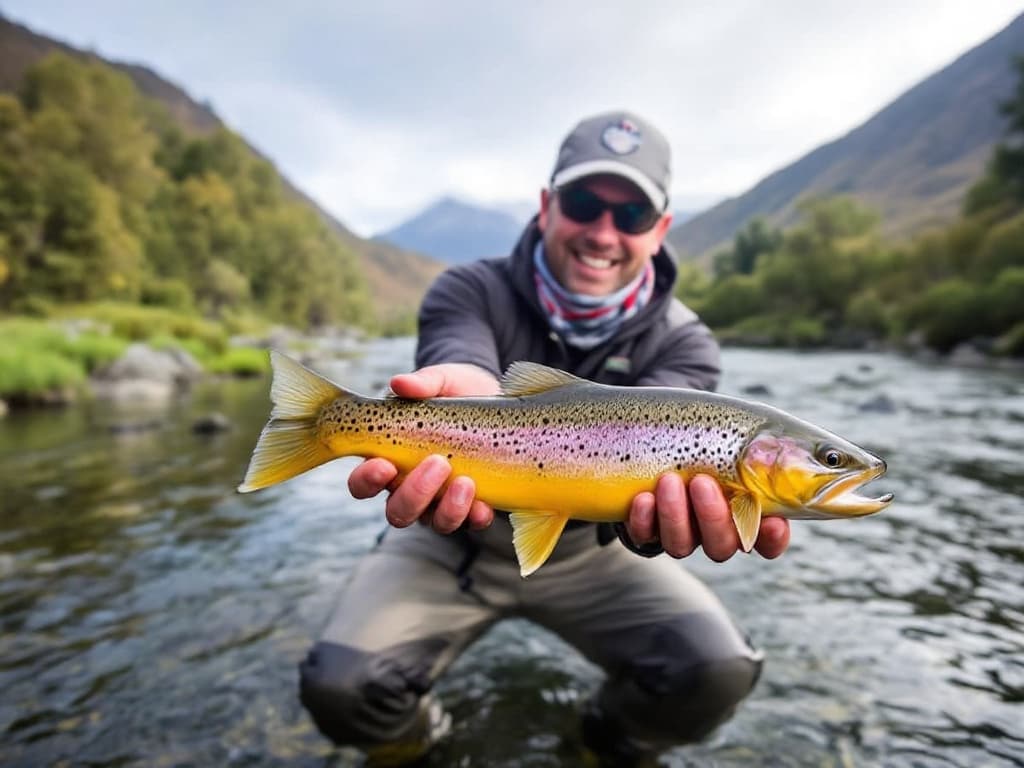
Most people who try fly fishing for the first time feel quietly embarrassed about how hard it is. That's not a warning — it's just honest. The casting looks elegant from a distance, and then you're standing ankle-deep in the Tongariro at 7am, line wrapped around your leg, wondering what you've gotten yourself into. That moment is normal. It passes. And New Zealand, it turns out, is one of the genuinely great places on earth to work through it.
The country has an outsized reputation among international anglers, and for once the reputation is earned. The rivers here — especially in the South Island — run clear enough to spot individual trout holding in the current. The fish are wild. The scenery is the kind that makes you stop mid-cast just to look. And the regulatory framework, while occasionally confusing for newcomers, is set up to protect what's here rather than exploit it.
But not every river suits a beginner. Some are technical, exposed, or just genuinely difficult to fish without experience. Picking the right starting point matters more than most guides admit.
Why the Tongariro keeps coming up — and why that's fair
The Tongariro River in the central North Island is where a lot of New Zealanders first encounter proper fly fishing, and there's a reason for that. It's accessible, well-documented, and fishes well even in winter when the rainbow trout run upriver from Lake Taupō. The town of Turangi is built around the river in a way that few NZ towns are built around anything, and the local guide network — outfitters like Rod & Reel in Turangi — know how to work with nervous beginners without making them feel stupid about it.
The nymphing here is the main event. You're fishing subsurface with weighted flies, reading the water for depth and current breaks, and generally not worrying too much about presentation perfection — which suits beginners well. The river is wide enough that even messy casts can land in productive water. That said, weekends from June through August can feel more like a queue than a fishing trip. Worth knowing before you pack the car.
The Mataura — if you want to actually understand what you're doing
Down in Southland, the Mataura River has a reputation among dry fly purists that borders on religious. The evening rise here — when trout feed on the surface in the fading light — is something that experienced anglers travel from overseas specifically to witness. For a beginner, it's probably too technical to crack quickly.
Here's the thing though: fishing the Mataura badly is still fishing the Mataura. The river is relatively accessible along much of its length via public road, it's genuinely beautiful in a flat, pastoral, Southland kind of way, and even if you don't hook anything, you'll learn more about reading water in a day here than in a week on easier rivers. The fish are smart. They've been pressured. Getting one to eat your fly feels like solving something, not just getting lucky.
If you're serious about fly fishing New Zealand as a long-term pursuit rather than a one-off experience, the Mataura is worth building toward even if it humbles you early.
The upper Whanganui — underrated and worth the drive
The Whanganui River doesn't get the same airtime as the Tongariro or the South Island classics, and that's partly because it's not traditionally known as a trout fishery in its lower reaches. But the upper Whanganui, above Taumarunui, holds brown trout in stretches that rarely see fishing pressure. The water moves through native bush, the access is quiet, and on a weekday you might have a long reach of river entirely to yourself.
Brown trout are generally considered harder to catch than rainbows — they're warier, more territorial, and less forgiving of clumsy approaches. But in the upper Whanganui, the fish haven't been educated by constant angling pressure, which levels the playing field a bit. You still need to move quietly and make reasonable presentations, but you're not up against fish that have seen every nymph pattern on the market.
The river also carries genuine cultural significance — it's a taonga, a treasure, and the Whanganui iwi have a long relationship with it. That's not a footnote. It's part of what the river is. Fish it with that awareness.
Nelson lakes and the rivers that feed them
Lake Rotoiti and Lake Rotoroa in the Nelson Lakes National Park feed a network of rivers that are, by any honest measure, among the most beautiful places to fish in the Southern Hemisphere. The Travers River, which flows into Lake Rotoiti, is a classic backcountry stream — gin-clear, narrow, and running through beech forest that makes the light strange and lovely in late afternoon.
For a beginner, the sight-fishing here is genuinely instructive. You can often see the trout before you cast to them, which changes the experience completely. Instead of guessing where the fish might be, you're watching one, studying how it moves, deciding where to put the fly. It's a different kind of learning. Slower, more deliberate, occasionally more frustrating.
Getting there requires either a boat across the lake or a walk in from the carpark. Neither is particularly hard, but it's not a pull-up-and-fish situation. A day trip from Nelson or St Arnaud is the usual approach, and local guides operating out of the St Arnaud village can be worth the money if you want someone to explain what you're seeing.
The Rangitata — big water, big fish, honest challenge
The Rangitata in Canterbury braids across a wide gravel plain before emptying into the Pacific, and it fishes differently from most rivers on this list. This is high-country water — cold, powerful in places, and subject to rapid changes in condition. When it's running clear after a settled spell, it can hold trophy-sized brown and rainbow trout in its upper reaches that are genuinely hard to find anywhere else in the world without paying serious money.
For beginners, the lower reaches of the Rangitata are more approachable than the headwaters. The water spreads across multiple channels, which creates protected pockets and slower runs where fish hold. You don't need to wade deep or cast 20 metres. What you do need is some ability to read braided channels, because the fish move around more than they would in a single-thread river. Getting this wrong means fishing beautiful water with nobody home.
The area around Peel Forest is a reasonable base if you're exploring this part of Canterbury. It's low-key, the accommodation is modest, and nobody's going to judge you for spending an evening with a rod in your hand and nothing to show for it.
A word on licences, because it's less complicated than it looks
New Zealand fishing licences are managed regionally by Fish & Game councils, and the boundaries don't always line up with what you'd expect. The Tongariro, for instance, sits in the Auckland/Waikato Fish & Game region. The Mataura is Southland. If you're planning to fish across regions, you'll need either multiple regional licences or a national licence — which, at around NZD $130 for a full season, is usually the more sensible option for anyone fishing more than two or three days a year.
Licences are available online through Fish & Game NZ, which also publishes up-to-date regulations by region. The rules around bag limits, size limits, and gear restrictions vary — some rivers are fly-only, some have seasonal closures, and a handful have special permit requirements. None of this is designed to be obstructive. It's there because the fishery is genuinely worth protecting, and most anglers, once they've spent time on these rivers, understand that without needing it explained.
Gear that won't embarrass you and won't break the bank
You don't need to spend NZD $800 on a rod to start fly fishing in New Zealand. A decent mid-range setup — something like a 9-foot, 5-weight from a brand like Sage or Redington — will handle the majority of rivers on this list without issue. Most fly fishing shops in Christchurch, Queenstown, and Auckland stock beginner-friendly gear, and rental packages are available from guide operations if you want to try before you commit.
The flies matter more than most beginners expect. Local fly shops — and there are good ones, like Fishing Headquarters in Christchurch or the Alpine Sports & Tackle in Twizel — stock patterns tied specifically for NZ conditions. Telling the person behind the counter which river you're fishing and asking what's working is genuinely useful. They know. They're usually happy to tell you. And it costs nothing to ask.
The honest truth about guided vs. solo
Going with a guide on your first proper day out on a NZ river is expensive — you're typically looking at NZD $600 to $900 for a full day with a licensed guide — and not everyone can or wants to spend that. That's a real consideration, not something to wave away.
But a good guide compresses the learning curve dramatically. They'll put you on fish you wouldn't have found alone, correct your casting before bad habits set in, and explain what you're looking at when you're looking at the water. If you can afford one day with a guide at the start, it's probably worth more than two or three days thrashing around on your own. After that, you can fish independently with a much clearer sense of what you're trying to do.
If guided trips aren't in the budget, the online community around NZ fly fishing is active and generally welcoming. Forums and Facebook groups like New Zealand Fly Fishing have members who've fished every river on this list many times over and are often willing to share information with genuine beginners. Not always — there's a certain type of angler who guards their spots like a state secret — but often enough that it's worth asking.
Starting somewhere specific is better than planning forever
There's a version of this hobby where you spend six months reading about rivers, comparing gear, and watching YouTube casting tutorials, and then another six months telling yourself you'll go next season. The rivers will still be there. The fish won't wait, but they'll come back. That's actually the point — New Zealand's trout fishery is self-sustaining precisely because people have been careful about it for a long time.
Pick a river. The Tongariro if you're in the North Island and want a gentle introduction with infrastructure around you. The Mataura if you're in Southland and prepared to be humbled. The Nelson Lakes if you want something genuinely beautiful and don't mind working for it. Then go. Take more layers than you think you need, bring a lunch, and don't expect to be good at it immediately. Nobody is.
The rivers here are extraordinary. That part of the reputation is completely true.