
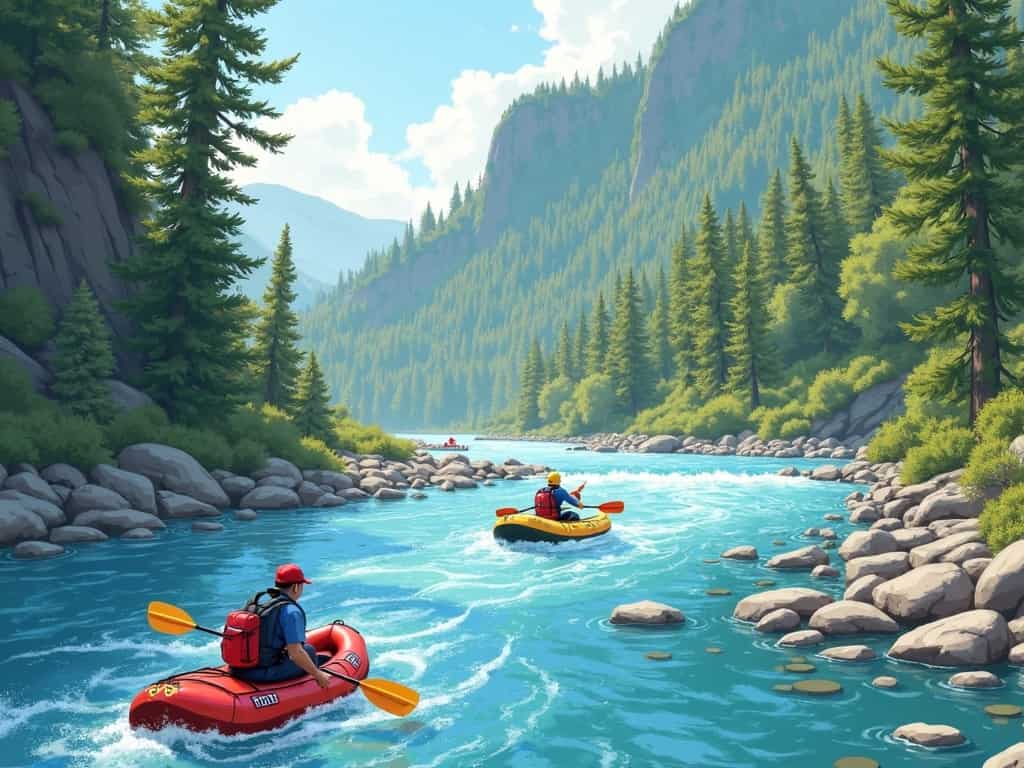
Most people who've had a bad river experience will tell you the same thing: they didn't pick the wrong activity, they picked the wrong grade. Someone talked them into it, or they underestimated the gap between "I've done a bit of kayaking" and "I'm comfortable in moving water." The river doesn't negotiate. It just keeps going.
New Zealand has some of the most varied river terrain on the planet — from glassy, slow-moving stretches through farmland to genuinely terrifying gorges that demand technical skill and a solid safety plan. That range is one of the things that makes this country extraordinary for anyone who loves the outdoors. It's also what makes choosing the right route genuinely important, not just a preference thing.
What the grading system actually means
Rivers in New Zealand are graded on an international scale from I to VI. Grade I is flatwater with minimal current — think a gentle float on a warm afternoon. Grade VI is essentially unrunnable by most humans without significant risk to life. Most recreational paddlers spend their time somewhere between Grade II and IV, and that's a pretty wide spectrum.
Grade II means you'll encounter small waves and easy rapids with clear channels. It's forgiving. Grade III is where things get genuinely interesting — irregular waves, some manoeuvrability required, and a few moments where you'll actually have to think. Grade IV is technical, fast, and demands experience. If you're uncertain whether you're ready for Grade IV, you're probably not ready for Grade IV.
The awkward truth is that the grading system is a rough guide, not a guarantee. A Grade III river can behave like a IV after heavy rain. Water levels shift constantly in New Zealand, especially in the South Island where snowmelt and rapid weather changes are part of the deal. Always check current conditions with local operators or through the MetService river flow data before you go anywhere near the water.
Start with who's actually coming
The most important variable isn't the river — it's your group. A solo intermediate paddler and a family of four with two kids who've never been on a river are not choosing from the same list of options. That sounds obvious, but groups consistently overestimate their collective ability because one person in the group is more experienced than the others.
If you've got mixed experience levels, you're generally capped at the lowest common denominator — and that's not a criticism of anyone, that's just how rivers work. A nervous beginner on Grade III water isn't just uncomfortable for them; it creates real risk for everyone, including whoever has to manage a swim recovery in fast current. Better to do Grade II together and actually enjoy it than spend Grade III managing someone's anxiety from the back of a raft.
On that note: kids are often more capable on water than adults assume. Some guided operators on the Rangitata or the Tongariro run trips suitable for children from around eight years old, depending on the section. Check minimum age requirements directly with the operator rather than guessing.
The difference between guided and independent trips
Going guided is the most sensible entry point for anyone without significant river experience, full stop. Operators like Rafting New Zealand-affiliated companies on the Kaituna, Buller, or Rangitata rivers provide safety-trained guides, all gear, and the kind of real-time local knowledge that no YouTube video can replicate. Yes, it costs money. Guided half-day raft trips typically run NZD $100–$180 per person depending on the river and operator. That's not cheap, but it includes a guide who's done that section hundreds of times.
Independent trips require a completely different level of preparation. You'll need your own gear — kayak or raft, PFD, helmet, throw bags, first aid — and you'll need to be honest about your ability to self-rescue and support others. The Whanganui River Journey, for instance, is a popular independent canoe trip classified as a Grade I–II with some Grade III sections. It's beautiful, it's manageable for paddlers with moderate experience, and it's also a multi-day wilderness trip where phone coverage is patchy and help can be hours away. Plan accordingly.
Matching the river to the vibe, not just the skill
Skill is one dimension. But there's also the question of what kind of day you actually want. Some people come to a river wanting calm, unhurried movement through bush — the kind of experience that's genuinely restorative. Others want the hit of an adrenaline rapid, something to talk about on the drive home. Both are legitimate. The mistake is pretending you want one when you actually want the other.
If you're after slow and peaceful — the kind of river day that feels more like a long lunch with nature than a sport — the Whanganui, the lower Buller near Westport, or the upper Clutha near Wānaka are worth looking at. These are rivers where you can drift, stop, eat something, and genuinely switch off. Honestly, if the weather turns bad mid-week and the river isn't happening, those kinds of days aren't that far removed from the best entertainment ideas for lazy weekend moments — just with slightly more mud.
For people who want the adrenaline version: the Kaituna River near Rotorua is consistently described as one of the most accessible white-water experiences in New Zealand, with Tutea Falls — a seven-metre drop — as its centrepiece. It's runnable in a guided group context even for beginners with reasonable fitness. The Rangitata Gorge in Canterbury is more serious and sits firmly in the upper Grade IV range, aimed at people who want to feel genuinely challenged rather than just thrilled.
What the seasons actually do to rivers
New Zealand rivers are not static. This is one of those things that guidebooks acknowledge briefly and then move on from, but it genuinely changes everything. The same river section can be a relaxed float in February and a technical, dangerous run in August after sustained rain or snowmelt. Water level, speed, and temperature all shift significantly across seasons.
Summer (December–February) is generally the most forgiving time to be on the water — lower flows on many rivers, warmer air temperature if you swim, and more daylight to work with. Autumn can bring beautiful conditions but also unpredictable rain events. Winter paddling is for people who know what they're doing and have appropriate thermal gear; water temperature in the South Island in July will take your breath away in the worst possible sense if you go in unprepared. Spring is complicated — snowmelt means rivers can be running high and fast even on sunny days.
Check the NIWA river flow data or contact the relevant regional council for current conditions. Some operators post live or recent condition updates on their websites or Facebook pages. It's worth a ten-minute check before committing to anything.
Gear you genuinely need versus gear that's nice to have
There's a version of river prep that involves buying everything at Torpedo7 before you've even decided on a route. Resist that impulse. The non-negotiables are a correctly fitted personal flotation device (PFD), a helmet for anything above Grade II, appropriate clothing for the water temperature (not the air temperature), and footwear that won't come off if you swim.
Wetsuits are often underused by New Zealanders who think they're only for surfers. For river paddling in water under 18°C — which covers most of the South Island and a lot of the North Island outside of summer — a wetsuit is practical, not optional. Hypothermia is a genuine risk, and it impairs decision-making before you even realise it's happening.
If you're going independent on a multi-day trip, a dry bag for your phone, snacks, first aid kit, and emergency supplies is non-negotiable. Throw bags and a knowledge of how to use them matter if there's any serious current involved. Renting gear from local operators before buying is a sensible approach — you'll figure out what you actually need versus what you thought you needed.
When to walk away
The most underrated skill in river recreation is knowing when to get out of the water — or not get in at all. Rivers swell fast in New Zealand. A cloudless day at the put-in doesn't mean the catchment upstream hasn't had heavy rain overnight. Coloured water (brown, grey, or murky rather than clear) is a signal that the river is carrying sediment from upstream, which usually means higher flow and less predictability.
If something feels off and you can't articulate exactly why — trust that instinct. Not because rivers are mystical, but because you've probably picked up on something real that you haven't consciously processed yet. Experienced guides talk about this all the time. The river will be there next weekend. A bad decision in a gorge frequently isn't reversible.
Choosing the right river route is ultimately about matching honesty to ambition. Know what you can actually do, know who you're with, check the conditions, and then go find the version of the river that fits all of those things. That's the whole point. There's no prize for suffering through the wrong one.