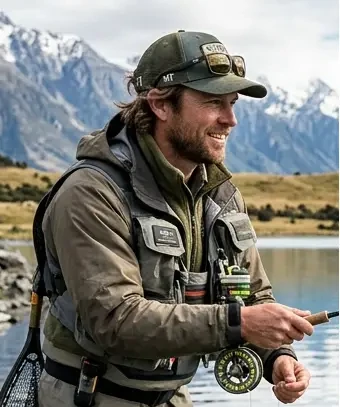
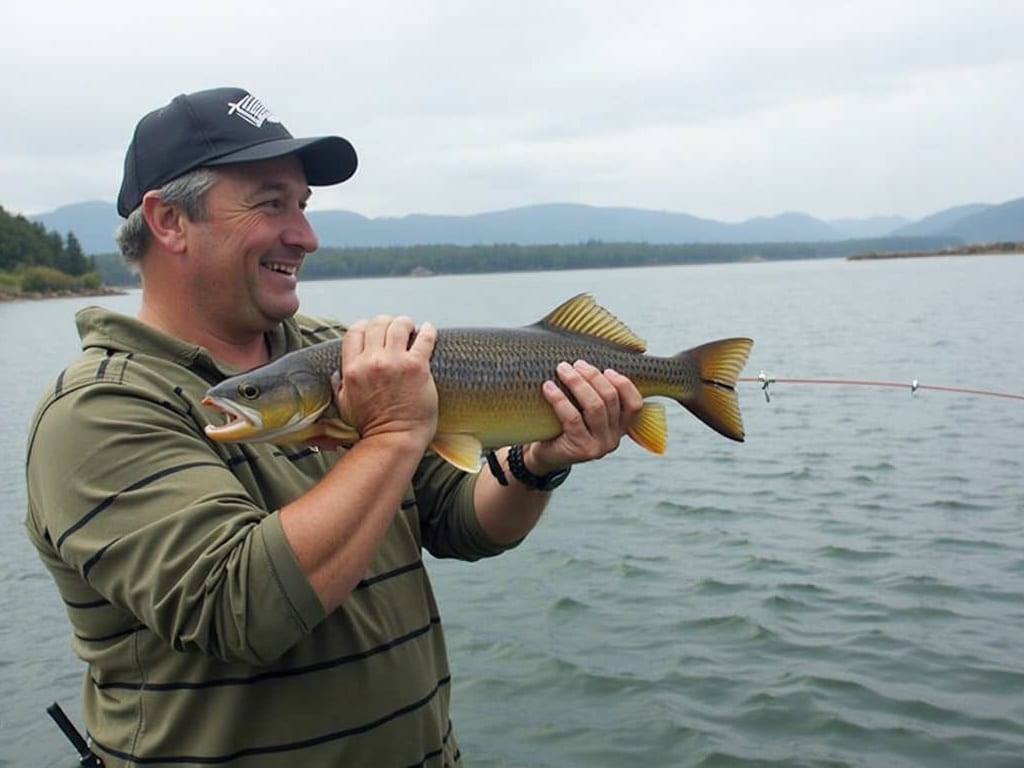
Retirement hits differently when you've spent twenty years getting hit by other people for a living. The physio appointments thin out, the training schedule disappears, and suddenly there's a Tuesday with nothing in it. For a surprising number of New Zealand's most decorated rugby players, the answer to that silence has been the same: grab a rod, find a river, and go fishing.
This isn't a coincidence. There's something specific about the transition from elite sport to ordinary life that seems to send former players straight to the water. And when you actually talk to them about it — which several journalists and podcasters have done over the years — the reasons aren't soft or sentimental. They're pretty practical.
The quiet after the whistle
Think about what a professional rugby career actually involves. Your body is someone else's asset. Your schedule is managed by someone else. Your performance is analysed, critiqued, and broadcast to the nation. The psychological load of that is immense, even if you love the game — maybe especially if you love the game.
When it ends, players often describe a strange flatness. Not depression, exactly, though that happens too. More like the absence of something loud that you didn't realise you'd been leaning on. For players who grew up in small towns across Waikato, Southland, Taranaki, or the Hawke's Bay, fishing wasn't exactly a foreign concept to begin with.
Richie McCaw, who is arguably the most celebrated All Black in history, has spoken openly about his love of the outdoors and his need for space after rugby. He's not the only one. The fishing culture among former NZ rugby players runs deep — it's social, it's meditative, and frankly, it's one of the few hobbies where being a large person who used to absorb enormous physical punishment is not the most relevant fact about you.
It's not really about the fish
Here's the thing about fishing that non-fishers consistently misunderstand: the catching is almost beside the point. Most serious anglers will tell you this themselves, usually while looking slightly offended that you asked about it.
What fishing actually provides is structured time in a natural environment with a clear but non-urgent goal. For someone who's spent decades operating under extreme pressure, that combination is genuinely rare. There's no scoreboard, no selectors, no contract negotiations. If you don't catch anything, you can come back tomorrow. The river doesn't care who you used to be.
New Zealand happens to be extraordinary terrain for this. The South Island rivers — the Mataura, the Waitaki, the Tongariro in the North Island — are world-famous among fly fishing communities globally. People fly in from Europe and the US specifically to fish these waters. The fact that you can drive there from Christchurch or Taupō and do it on a Wednesday morning is something locals genuinely undervalue. A proper guide or a day's worth of quality NZ fishing on the right river is one of those experiences that would cost you significantly more almost anywhere else on earth.
The culture actually fits
Rugby culture in New Zealand has always had a strong rural spine. A huge proportion of All Blacks have come from regional centres — places where hunting and fishing were just part of growing up, woven into weekends and school holidays and what your uncle did on a Saturday. The transition from the paddock to the river isn't some dramatic personality shift. For a lot of these players, it's a return.
There's a whakapapa to it, really. The idea of going back to the land and the water — especially water — carries weight in te ao Māori in ways that go well beyond sport or leisure. For players with Māori heritage, and that's a significant proportion of the All Blacks over any given era, the pull towards rivers and the sea isn't incidental. It's ancestral. The mauri of a healthy river is something that's taught, felt, and passed down through whanau.
That's not to mystify something that also has a very ordinary social dimension. A lot of these blokes just like fishing because their dad fished, and their mates fish, and it's a good excuse to be somewhere quiet with someone you trust. The deeper meaning and the bloke-having-a-beer-by-the-river version of this are not mutually exclusive.
The gear obsession is real, and slightly absurd
If there's one thing former elite athletes are primed for, it's obsessing over equipment. Years of being told that the difference between good and great is marginal and technical tends to produce people who care a lot about small details. Fishing gear — especially fly fishing gear — is a natural trap for this.
The fly fishing world in New Zealand has a range of excellent local outfitters and operators who'll happily spend forty-five minutes explaining the difference between two rods that look identical to a newcomer. Brands like Orvis and Sage dominate the premium end, but there's a solid ecosystem of NZ-specific knowledge that matters more than gear brand on our rivers — which hatches are active, which pools are fishing well, what the Tongariro is doing this week.
To be fair, you can also fish a New Zealand river with very modest equipment and do just fine. The trout don't check your rod's retail value. That's worth saying clearly, because fishing can project a slightly exclusionary vibe that puts people off before they've started.
The social side nobody talks about enough
Elite sport builds intense friendships fast — and then scatters them. You spend fifteen years with people in changing rooms, on long-haul flights, in rehab bays, and then everyone disperses into commentary roles or business or coaching. Staying connected takes effort.
Fishing is one of the cleanest ways to maintain those friendships in a way that doesn't require a formal occasion. You don't need a reason to go fishing with someone. It's not a charity dinner or a corporate event or a jersey presentation. It's just two people standing in a river, which is its own perfectly valid thing to do on a Thursday.
Several former All Blacks have described fishing trips as part of how they stay sane in the years after rugby — not therapy, exactly, but close enough that the distinction probably doesn't matter much. The combination of physical space, low stakes, and a trusted companion does something for the nervous system that a gym session or a podcast can't quite replicate. Honestly, there might be something to that.
When it becomes something more serious
Some former players have moved from casual fishing enthusiast to something more purposeful. There are ex-players now involved in conservation work, river access advocacy, and local fishing clubs in a way that would have surprised their twenty-two-year-old selves. New Zealand's freshwater system is under genuine pressure — land use, water quality, irrigation — and fishing communities have been among the more organised voices pushing back on that.
Forest & Bird and Fish & Game New Zealand are two organisations you'll find ex-players attached to in various capacities, some formally, some just as vocal members of the public who happen to have a platform. When a recognisable face from All Blacks history shows up to a regional council meeting about a river consent, it gets attention. That's the whole point, and they seem to know it.
There's a dry irony in the idea that some of the most competitive people this country has produced are now among its most passionate advocates for leaving things undisturbed. But rivers will do that to you.
What new players might actually learn from this
Current players — and this is slightly awkward to say because nobody asked — might benefit from building this kind of practice earlier rather than later. The research on athlete transition and mental health post-career is not cheerful reading. The identity loss is real and it tends to hit hard, often harder than players expect, because the warning signs aren't visible until you're already in it.
Fishing isn't a cure for any of that. Let's not oversell it. But having a practice that connects you to place, to community, and to something that has nothing to do with your athletic identity is a reasonable hedge. A lot of former players describe wishing they'd built that earlier — not to escape rugby, but to have somewhere else to put yourself when rugby eventually stopped being available.
New Zealand's landscape makes this accessible in a way that's genuinely unusual globally. The rivers are public, the access points are numerous, and the culture of spending time outdoors is embedded in how most people here grew up. You don't have to be a rugby legend or a wealthy retiree to find a river that'll hold your attention for six hours. Most of this country's best water is available to anyone willing to drive for it.
The river keeps moving
There's something fitting about the image: someone who spent decades defined by force and speed, standing completely still in cold water, watching a dry fly drift. Not performing. Not being watched. Just there.
That's not a metaphor you need to push too hard. It holds on its own. The river doesn't remember the Grand Slam, the Super Rugby final, the Lions series. It just keeps going past, the same as it always has, and for a lot of former players that turns out to be exactly what they needed.
Whether you're a retired All Black or someone who just needs two hours away from a screen, the logic is the same. Get to the water. See what happens. You probably won't catch much on your first go — that's fine, that's actually fine — but you'll almost certainly come back.