Most beginner mistakes are timing mistakes
New anglers often assume the issue is gear, when the real issue is pace. They cast too quickly, move too often, and change setup before reading what the water is doing. The best improvement comes from slowing down and making each cast intentional, especially when you start with the low-pressure river guide rather than high-pressure water.
Pick one lane, test one approach, and observe the drift. If nothing happens, change one variable at a time. This simple method teaches more than constant trial-and-error chaos.
Positioning beats force
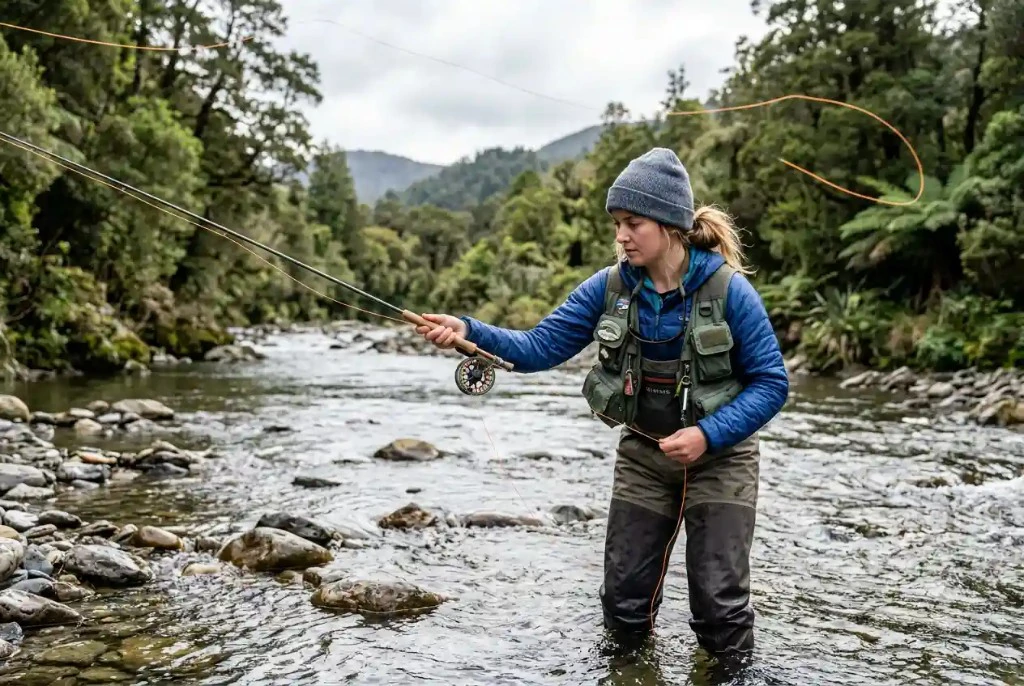
Standing in a better spot usually matters more than casting harder. Keep low where possible, avoid sudden movement near clear edges, and use angles that let your line drift naturally. Fish respond to clean presentation more than power.
Track what worked
After the trip, note one success and one mistake, then prep your next outing with an weather-ready checklist so improvements stick. Over a few outings, these notes create a practical learning curve. Confidence grows quickly when improvements are visible and repeatable.
Confidence grows from repeatable decisions
Beginner progress is usually less about talent and more about decision quality. If you repeat one clean routine—observe, cast, adjust, note—you improve quickly because each step teaches you something specific. Try to avoid emotional resets after every quiet patch. A calm ten-minute adjustment is far more useful than changing everything at once. Keep your rig tidy, your movement deliberate, and your expectations realistic for the conditions in front of you.
It also helps to fish with one simple goal per outing. Maybe today is about line control, not numbers. Maybe it is about better positioning, not distance. Focus makes learning faster and more enjoyable. By the third or fourth session, you will usually notice that your casts are cleaner, your choices are calmer, and your time on water feels much more natural.